Stocks close higher despite DOJ probe into Fed Chair Powell
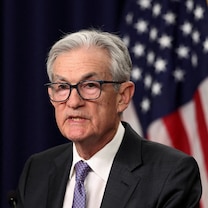
Powell rebuked the probe as an effort to undermine the Fed's independence.
Stocks closed higher on Monday, shrugging off a dip earlier in the day after reports that the Department of Justice had opened a criminal investigation into Federal Reserve Chair Jerome Powell.
The allegations appeared to center on testimony made by Powell about a multi-billion-dollar building renovation at a congressional committee in June. In a rare video message, Powell rebuked the probe as a politically motivated effort to influence Fed policy.
The Dow Jones Industrial Average closed up about 80 points, or 0.1%, while the S&P 500 also climbed 0.1%. The tech-heavy Nasdaq increased 0.2%.
Investor activity on Monday also appeared to include reaction to a social media post from President Donald Trump advocating for a 10% cap on credit card interest rates for one year. Shares of several major banks and credit card issuers fell on Monday.
The DOJ's criminal probe follows a monthslong influence campaign undertaken by Trump as he has frequently slammed the Fed for what he considers a reluctance to significantly reduce interest rates.

The criminal probe appears to center on allegations of false remarks made by Powell about a renovation of the Fed's headquarters during a congressional hearing in June.
Trump has repeatedly denounced Powell for alleged overspending tied to the central bank's $2.5 billion renovation project. The Fed attributes spending overruns to unforeseen cost increases, saying that its building renovation will ultimately "reduce costs over time by allowing the Board to consolidate most of its operations," according to the central bank's website.
Federal law allows the president to remove the Fed chair for "cause" -- though no president has ever done so. Powell's term as chair is set to expire in May, but he can remain on the Fed's policymaking board until 2028. Powell has not indicated whether he intends to remain on the board.
In a video message on Sunday, Powell said the allegations against him amount to "pretexts" invoked in service of the Trump administration's push for lower interest rates.
"No one -- certainly not the chair of the Federal Reserve -- is above the law," Powell said. "But this unprecedented action should be seen in the broader context of the administration's threats and ongoing pressure."
Trump denied any involvement in the criminal investigation during a brief interview with NBC News on Sunday night.
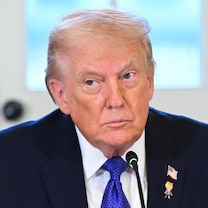
"I don’t know anything about it, but he’s certainly not very good at the Fed, and he’s not very good at building buildings,” Trump said.
The president brought up interest rates, saying, "What should pressure him is the fact that rates are far too high. That’s the only pressure he’s got,” Trump said, according to NBC News. “He’s hurt a lot of people,” he added. “I think the public is pressuring him.”
Treasury yields jumped on Monday, suggesting possible concern about the independence of the Fed and its capacity to manage inflation.
Since bonds pay a given investor a fixed amount each year, the specter of inflation risks devaluing the asset and, in turn, makes bonds less attractive.
Bond yields rise as bond prices fall. When a selloff hits and demand for bonds dries up, it sends bond prices lower. In turn, bond yields move higher.
A longstanding norm of independence usually insulates the Fed from direct political interference.
In the event a central bank lacks independence, policymakers tend to favor lower interest rates as a means of boosting short-term economic activity, analysts previously told ABC News. But, they added, that posture poses a major risk in the possibility of yearslong inflation fueled by a rise in consumer demand, untethered by interest rates.
Related Topics

Popular Reads
ABC News Live