Here's a list of the individuals, including Jerome Powell, targeted by the Trump administration
The administration says these actions are "driven by law and not by politics."
The Justice Department's launching of a criminal investigation into Federal Reserve Chair Jerome Powell is the latest salvo in what critics call a campaign of retribution on the part of the Trump administration.
Administration officials have insisted that any such actions are, as Vice President JD Vance said, "driven by law and not by politics." But they come after President Donald Trump vowed during his presidential campaign that he would seek retribution if reelected.
The moves follow months of the administration vowing investigations into perceived enemies, stripping individuals of security clearances, and removing protective details.
Here's a look at some of the actions that the president's critics have experienced, which many of them perceive as retribution.
FACING INVESTIGATION
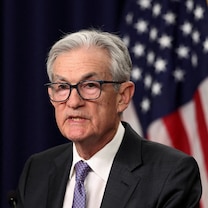
Jerome Powell, Federal Reserve chair
Following the Trump administration's increasingly hostile push to pressure the independent Federal Reserve to lower interest rates, federal prosecutors have launched a criminal investigation into Powell, the Fed chair confirmed in a statement on Jan. 11.
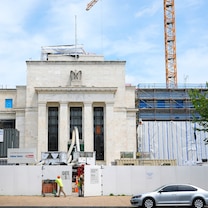
The investigation is related to Powell's congressional testimony last June regarding the multi-year renovation of the Federal Reserve buildings, Powell said in a video message released by the Fed.
But Powell said it's clear the probe is ultimately part of the Trump administration's pressure campaign on the Fed, which helps shape the nation's monetary policy.

"This is about whether the Fed will be able to continue to set interest rates based on evidence and economic conditions -- or whether instead monetary policy will be directed by political pressure or intimidation," Powell said.
In a statement to ABC News, a spokesperson for Attorney General Pam Bondi said, "The Attorney General has instructed her U.S. Attorneys to prioritize investigating any abuse of taxpayer dollars."
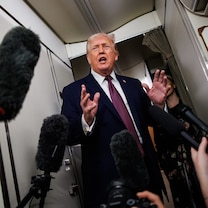
Trump denied any involvement in the criminal investigation during a brief interview with NBC News following Powell's statement.
"I don't know anything about it, but he's certainly not very good at the Fed, and he's not very good at building buildings," Trump said.
Lisa Cook, Federal Reserve governor
Trump in August said he was firing Cook, a member of the seven-person Federal Reserve board of governors, over allegations raised by Federal Housing Finance Agency Director Bill Pulte that she committed mortgage fraud by improperly designating both her homes in Georgia and Michigan as her primary residence.
In a statement, Cook -- who has not been charged with any crime and denies any wrongdoing -- said that she would continue to serve in her role as a Fed governor, and she subsequently filed suit against Trump over his move to fire her.

"President Trump has no authority to remove Federal Reserve Governor Lisa Cook," said her attorney Abbe Lowell. "His attempt to fire her, based solely on a referral letter, lacks any factual or legal basis. We will be filing a lawsuit challenging this illegal action."
Trump has been urging the Federal Reserve to slash interest rates in an effort to boost the economy, and replacing Cook on the board would give Trump's appointees the majority. No president has ever attempted to remove a Fed governor in the Fed's 112-year history.
A federal judge blocked the attempted firing, and the Supreme Court is scheduled to hear Cook's case in January.
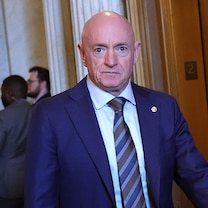
Mark Kelly, United States senator
The Department of Defense said on Nov. 14 it was launching a "thorough review" into what it called "serious allegations of misconduct" on the part of Democratic Sen. Mark Kelly, after Trump accused Kelly and other Democratic lawmakers of "seditious behavior" for a video in which they said that U.S. service members could refuse illegal orders.
Kelly, a retired U.S. Navy captain and the husband of former Rep. Gabby Giffords, was one of six Democrats featured in a video in which they told military members, "This administration is pitting our uniformed military and intelligence community professionals against American citizens," and told the service members, "Our laws are clear. You can refuse illegal ordered. No one has to carry out orders that violate the law or our Constitution."

Trump, in a series of social media posts, called the group "traitors" who should be "in jail." At one point, Trump said their action could be "punishable by death" though later said, "I'm not threatening death, but I think they're in serious trouble."
In a statement, the Pentagon said, "The Department of War reminds all individuals that military retirees remain subject to the UCMJ for applicable offenses, and federal laws such as 18 U.S.C. § 2387 prohibit actions intended to interfere with the loyalty, morale, or good order and discipline of the armed forces. Any violations will be addressed through appropriate legal channels."
"If this is meant to intimidate me and other members of Congress from doing our jobs and holding this administration accountable, it won't work," Kelly responded on X. "I've given too much to this country to be silenced by bullies who care more about their own power than protecting the Constitution."
In January, Defense Secretary Pete Hegseth censured Kelly, an administrative action that will result in a reduction in his rank and retirement pay.
Adam Schiff, United States senator
Schiff, who served as the lead manager during the first impeachment trial of President Trump in 2019, is being investigated by the DOJ for alleged insurance fraud related to a property in Maryland after Attorney General Pam Bondi named U.S. Pardon Attorney Ed Martin as a special prosecutor in the probe.
Schiff's attorney has denied the allegations, calling them "transparently false, stale, and long debunked."

"I have always suspected Shifty Adam Schiff was a scam artist," Trump wrote on his social media platform in July. "Mortgage Fraud is very serious, and CROOKED Adam Schiff (now a Senator) needs to be brought to justice."
Schiff's lawyer has called the allegations "transparently false, stale, and long debunked."
"This is the kind of stuff you see tinpot dictators do. It is designed to intimidate his political opponents and somehow try to silence them," Schiff said in a video statement.
Eric Swalwell, United States representative
Swalwell, a Democratic representative from California, said in a lawsuit filed on Nov. 25 that he was the target of a criminal referral issued by Pulte in October.
The suit, which Swalwell filed against Pulte, accused Pulte of violating Sewell's First Amendment rights and privacy by allegedly using government databases to "concoct fanciful allegations of mortgage fraud" against him, the complaint said.

Pulte has maintained that the documents from his criminal referrals are part of the public record.
Swalwell has denied committing mortgage fraud, arguing that he maintains his primary residence in California while his wife's primary residence is in Washington, D.C., and has sued Pulte for allegedly misusing federal resources to target Trump’s political opponents.
Chris Christie, former New Jersey governor
Christie, an ABC News contributor, was an early supporter of Trump's 2016 presidential campaign and served as the head of his transition team, though he has since become one of the president's fiercest critics. Trump in August threatened to investigate Christie over an old political scandal related to the closure of a lane on the George Washington Bridge in order to retaliate against a political opponent.
Trump, who called for the probe on his social media platform, told reporters in the Oval Office that Christie is "guilty" but deferred to Attorney General Pam Bondi.

"I know Chris better than anybody in the room. I always felt he was guilty," Trump said. "If they want to look at it, not for me, if they want to look at it, they can. You could ask Pam [Bondi]. I think we have other things to do, but I always thought he got away with murder."
Trump had previously defended Christie's actions related to the lane closure, calling the original investigation an "Obama DOJ scam," and saying that Christie won a "complete and total exoneration" when the Supreme Court overturned the conviction of two of Christie's top staffers.
Jack Smith, former special counsel
Smith, who led the classified documents and Jan. 6 investigations into Trump, is being investigated by the U.S. Office of Special Counsel over whether his probes violated the Hatch Act, which limits the political activities of federal employees.
The investigation follows a referral from Republican Sen. Tom Cotton of Arkansas that asked the OSC to investigate Smith for his investigative and prosecutorial activities before the 2024 election, which Cotton argued were intended to harm Trump's political prospects.
Attorneys representing Smith have criticized the investigation as "imaginary and unfounded," describing the reasoning for the probe as baseless and "partisan" in nature.

In October, Republican House Judiciary Committee Chairman Jim Jordan, in a letter, asked Smith to testify before the panel so the committee can "understand the full extent to which the Biden-Harris Justice Department weaponized federal law enforcement."
"Deranged Jack Smith, in my opinion, is a criminal," Trump told reporters in the Oval Office the next day.
Smith testified in December during a closed-door hearing of the House Judiciary Committee, arguing his actions were "based on what the facts and the law required."
Miles Taylor, former chief of staff of the U.S. Department of Homeland Security
Taylor, who authored an anonymous op-ed in The New York Times in 2019 claiming that "senior officials in his own administration are working diligently from within to frustrate parts of [Trump's] agenda and his worst inclinations," is being investigated after Trump signed an executive order in April directing the Secretary of Homeland Security to "review Miles Taylor's activities as a Government employee" and submit a record with "recommendations for appropriate remedial or preventative actions to be taken to protect America's interests."
Christopher Krebs, former director of the Cybersecurity and Infrastructure Security Agency
Krebs, who was fired by Trump after he contradicted Trump's false claims about election fraud following the 2020 election, is the subject of a probe after Trump signed an executive order in April directing the attorney general and the secretary of Homeland Security to conduct a review to "identify any instances where Krebs' conduct appears to have been contrary to suitability standards for Federal employees, [or] involved the unauthorized dissemination of classified information."
INDICTED
James Comey, former FBI Director
Comey was indicted on Sept. 25 on charges of making a false statement and obstruction related to his testimony before the Senate Judiciary Committee in 2020, just days after President Donald Trump issued a public demand for his Justice Department to act "now" to bring prosecutions against Comey and other political foes. The former FBI head pleaded not guilty at his arraignment.
The charges followed Trump's ousting of the U.S. attorney for the Eastern District of Virginia, Erik Siebert, who according to sources had expressed doubts internally about bringing cases against Comey and New York Attorney General Letitia James after Trump appointed him to lead the office.

Trump then immediately moved to install Lindsey Halligan, a White House aide and his former defense attorney, to lead the office, despite her having no prior prosecutorial experience. Halligan quickly sought an indictment from the grand jury, despite career prosecutors in her office informing her that they could not establish probable cause to charge Comey, ABC News first reported.
U.S. District Judge Cameron McGowan Currie subsequently dismissed the criminal case against Comey on the grounds that Halligan's appointment was invalid.
Letitia James, New York attorney general
James was indicted on Oct. 9 on at one count of bank fraud and one count of making false statements to a financial institution after Halligan presented allegations to a federal grand jury that James had committed mortgage fraud related to a home she purchased in 2020. She pleaded not guilty at her arraignment.
James, who brought a $454 million civil fraud case against Trump, has been labeled, without evidence, a "corrupt attorney general" by Trump, whose ousting of Siebert came after sources say Siebert declined to bring a criminal case against James following a five-month investigation.

According to the indictment, James falsely described a property she purchased in Norfolk, Virginia, as a second home instead of an investment property in order to obtain a lower mortgage rate. James said she purchased the property for her great-niece and allowed her and her children to live in the house rent-free.
Along with the Comey case, Judge Currie dismissed the case against James on the grounds that Halligan's appointment was invalid.
James was also issued subpoenas in August inquiring about her civil fraud case against Trump and a corruption case she filed against the National Rifle Association, multiple sources told ABC News. A federal judge in New York threw out the subpoenas in January and disqualified the U.S. attorney investigating the case on the grounds that he was unlawfully appointed.
John Bolton, former national security adviser
Former Trump national security adviser John Bolton was indicted Oct. 16 on charges that he allegedly unlawfully transmitted and retained classified documents.
The indictment, handed up by a federal grand jury in Maryland, charges Bolton with eight counts of unlawful transmission of national defense information as well as 10 counts of unlawful retention of national defense information.

Bolton has long been a target of Trump's ire since leaving his first administration and publishing a tell-all book. Federal agents in August searched Bolton's Maryland residence and Washington, D.C., office.
More recently, Trump has taken aim at Bolton's criticisms of Trump's engagements with Russian President Vladimir Putin. Trump told reporters in August that he didn't know about the FBI search of Bolton's house.
ACCUSED OF CRIMES
Former President Joe Biden
During a March 14 speech at the Department of Justice, Donald Trump said that Biden was "essentially found guilty" of retaining classified documents in 2024 after a special counsel declined to charge him.
"In fact, he was essentially found guilty, but they said he was incompetent and therefore, let's not find him guilty, I guess. Nobody knows what that ruling was, but I didn't want any part of it. I think I would have rather been found guilty than what they found with him," Trump said.
"Bottom line is the special counsel in my case decided against moving forward with any charges," Biden said following the release of the special counsel's report. "And this matter is now closed."
Former President Barack Obama
Trump in July accused Obama of treason by alleging, without evidence, that he led an effort to undermine Trump's 2016 presidential campaign.
"Look, he's guilty. It's not a question," Trump said. "This was treason. This was every word you can think of. They tried to steal the election. They tried to obfuscate the election." A spokesperson for Obama called Trump's remarks "ridiculous and a weak attempt at distraction."
"Out of respect for the office of the presidency, our office does not normally dignify the constant nonsense and misinformation flowing out of this White House with a response. But these claims are outrageous enough to merit one," an Obama spokesperson said.
REVOKED OR THREATENED WITH REVOCATION OF SECRET SERVICE PROTECTION / SECURITY DETAIL
Kamala Harris, former vice president, 2024 Democratic presidential nominee
Trump on Aug. 29 revoked Secret Service protection for Harris, who he defeated in the 2024 presidential election, after Joe Biden, as president, had extended Harris' protective detail an additional year beyond the six months required by law for former vice presidents, according to multiple officials.
Hunter Biden, son of former President Joe Biden
After Hunter Biden was pardoned by his father in 2024 following convictions on tax evasion and federal gun charges, Trump vowed to remove the Secret Service protection for the younger Biden on March 17 after a reporter asked him about the security detail assigned to Hunter Biden during his vacation in South Africa.
Representatives for the Secret Service and the office of former President Biden did not immediately respond to requests for comment.

Ashley Biden, daughter of former President Joe Biden
Trump vowed to remove the Secret Service protection for Ashley Biden on March 17 after a reporter asked him about the security detail assigned to Hunter Biden during his vacation in South Africa. Representatives for the Secret Service and the office of former President Biden did not immediately respond to requests for comment.
Alejandro Mayorkas, former U.S. secretary of Homeland Security
Trump revoked Alejandro Mayorkas's Secret Service detail in March after Joe Biden, as president, had extended it. A representative for the Secret Service did not immediately respond to requests for comment.
Mike Pompeo, former secretary of state
Trump revoked Pompeo's security protection in January despite warnings from the Biden administration that he faced an ongoing threat from Iran.
Brian Hook, former U.S. special representative for Iran
Trump revoked Hook's security protection in January despite warnings from the Biden administration that he faced an ongoing threat from Iran.
Mark Milley, former chairman of the Joint Chiefs of Staff
Defense Secretary Pete Hegseth stripped Milley of his security detail in January and ordered the inspector general to begin investigating whether Milley committed crimes by undermining the chain of command.
John Bolton, former national security adviser
Trump revoked the Secret Service detail assigned to Bolton within hours of taking office.
Anthony Fauci, director of the National Institute of Allergy and Infectious Diseases
Fauci had his government security detail revoked on Jan. 23, sources familiar with the matter told ABC News. Fauci was protected by private security that was paid for by the government, but has since hired his own security detail following the cancellation.
SECURITY CLEARANCE REVOKED
Joe Biden, former president
Clearance was revoked after the White House announced March 21 that it was "no longer in the national interest" for him to access classified information.
Antony Blinken, former secretary of state
Clearance was revoked after the White House announced March 21 that it was "no longer in the national interest" for him to access classified information.
Jacob Sullivan, former national security adviser
Clearance was revoked after the White House announced March 21 that it was "no longer in the national interest" for him to access classified information.
Lisa Monaco, former deputy attorney general
Clearance was revoked after the White House announced March 21 that it was "no longer in the national interest" for her to access classified information.
Mark Zaid, whistleblower attorney
Clearance was revoked after the White House announced March 21 that it was "no longer in the national interest" for him to access classified information.
Norman Eisen, co-counsel for the House Judiciary Committee during first Trump impeachment
Clearance was revoked after the White House announced March 21 that it was "no longer in the national interest" for him to access classified information.
Letitia James, New York attorney general
Clearance was revoked after the White House announced March 21 that it was "no longer in the national interest" for her to access classified information.
Alvin Bragg, Manhattan district attorney
Clearance was revoked after the White House announced March 21 that it was "no longer in the national interest" for him to access classified information.

Andrew Weissmann, lead prosecutor in Robert Mueller's special counsel's office
Clearance was revoked after the White House announced March 21 that it was "no longer in the national interest" for him to access classified information.
Hillary Clinton, former secretary of state, 2016 Democratic presidential nominee
Clearance was revoked after the White House announced March 21 that it was "no longer in the national interest" for her to access classified information.
Liz Cheney, vice chair of the House Jan. 6 Committee
Clearance was revoked after the White House announced March 21 that it was "no longer in the national interest" for her to access classified information.
Kamala Harris, former vice president, 2024 Democratic presidential nominee
Clearance was revoked after the White House announced March 21 that it was "no longer in the national interest" for her to access classified information.
Adam Kinzinger, member of House Jan. 6 Committee
Clearance was revoked after the White House announced March 21 that it was "no longer in the national interest" for him to access classified information.
Fiona Hill, witness in 2019 House impeachment inquiry
Clearance was revoked after the White House announced March 21 that it was "no longer in the national interest" for her to access classified information.
Alexander Vindman, witness in 2019 House impeachment inquiry
Clearance was revoked after the White House announced March 21 that it was "no longer in the national interest" for him to access classified information.
Kimberly Cheatle, former director of Secret Service
The United States Secret Service announced it canceled her security clearance process on Aug. 4.
Miles Taylor, former chief of staff of the U.S. Department of Homeland Security
Trump signed a memo on April 9 ordering his administration to revoke his security clearance of Taylor, alleging that he "stoked dissension," published classified information, and violated his oath of office.
"I don't want to go out there and say this order achieved the president's objective of destroying my personal life, but the reality is that I had to step away from work because I couldn't do the work that I did anymore with this blacklisting in Washington," Taylor told Politico in June.
Christopher Krebs, former director of the Cybersecurity and Infrastructure Security Agency
Trump signed a memo on April 9 ordering his administration to revoke his security clearance of Krebs, alleging he was a "significant bad-faith actor who weaponized and abused his Government authority." Krebs, who Trump had fired as CISA director in 2020, resigned from his current job after Trump issued his executive order.
"This will require my complete focus and energy. It's a fight for democracy, for freedom of speech, and for the rule of law. I'm prepared to give it everything I've got," he told his former coworkers when announcing his resignation.
John Bolton, former national security adviser
Clearance was revoked when Trump, on his first day back in office, signed an executive order that removed the security clearance of fifty former intelligence officials because they signed a letter discrediting reporting about the Hunter Biden scandal.
James Clapper Jr., former U.S. director of national intelligence
Clearance was revoked when Trump, on his first day back in office, signed an executive order that removed the security clearance of fifty former intelligence officials because they signed a letter discrediting reporting about the Hunter Biden scandal.
Michael Hayden, former director of the Central Intelligence Agency
Clearance was revoked when Trump, on his first day back in office, signed an executive order that removed the security clearance of fifty former intelligence officials because they signed a letter discrediting reporting about the Hunter Biden scandal.
Leon Panetta, former U.S. secretary of defense
Clearance was revoked when Trump, on his first day back in office, signed an executive order that removed the security clearance of fifty former intelligence officials because they signed a letter discrediting reporting about the Hunter Biden scandal.
John Brennan, former director of Central Intelligence
Clearance was revoked when Trump, on his first day back in office, signed an executive order that removed the security clearance of fifty former intelligence officials because they signed a letter discrediting reporting about the Hunter Biden scandal.
Thomas Fingar, former chair of the National Intelligence Council
Clearance was revoked when Trump, on his first day back in office, signed an executive order that removed the security clearance of fifty former intelligence officials because they signed a letter discrediting reporting about the Hunter Biden scandal.
Richard Ledgett, former deputy director of the National Security Agency
Clearance was revoked when Trump, on his first day back in office, signed an executive order that removed the security clearance of fifty former intelligence officials because they signed a letter discrediting reporting about the Hunter Biden scandal.
Michael Morell, former director of the Central Intelligence Agency
Clearance was revoked when Trump, on his first day back in office, signed an executive order that removed the security clearance of fifty former intelligence officials because they signed a letter discrediting reporting about the Hunter Biden scandal.
Michael Vickers, former under secretary of defense for intelligence
Clearance was revoked when Trump, on his first day back in office, signed an executive order that removed the security clearance of fifty former intelligence officials because they signed a letter discrediting reporting about the Hunter Biden scandal.
Douglas Wise, deputy director of the Defense Intelligence Agency
Clearance was revoked when Trump, on his first day back in office, signed an executive order that removed the security clearance of fifty former intelligence officials because they signed a letter discrediting reporting about the Hunter Biden scandal.
Nicholas Rasmussen, former director of the National Counterterrorism Center
Clearance was revoked when Trump, on his first day back in office, signed an executive order that removed the security clearance of fifty former intelligence officials because they signed a letter discrediting reporting about the Hunter Biden scandal.
Russell Travers, former U.S. acting director of the National Counterterrorism Center
Clearance was revoked when Trump, on his first day back in office, signed an executive order that removed the security clearance of fifty former intelligence officials because they signed a letter discrediting reporting about the Hunter Biden scandal.
Andrew Liepman, former principal deputy director of the National Counterterrorism Center
Clearance was revoked when Trump, on his first day back in office, signed an executive order that removed the security clearance of fifty former intelligence officials because they signed a letter discrediting reporting about the Hunter Biden scandal.
John Moseman, former chief of staff for the Central Intelligence Agency
Clearance was revoked when Trump, on his first day back in office, signed an executive order that removed the security clearance of fifty former intelligence officials because they signed a letter discrediting reporting about the Hunter Biden scandal.
Larry Pfeiffer, former chief of staff at the Central Intelligence Agency
Clearance was revoked when Trump, on his first day back in office, signed an executive order that removed the security clearance of fifty former intelligence officials because they signed a letter discrediting reporting about the Hunter Biden scandal.
Jeremy Bash, former chief of staff at the Central Intelligence Agency
Clearance was revoked when Trump, on his first day back in office, signed an executive order that removed the security clearance of fifty former intelligence officials because they signed a letter discrediting reporting about the Hunter Biden scandal.
Rodney Snyder, former chief of staff at the Central Intelligence Agency
Clearance was revoked when Trump, on his first day back in office, signed an executive order that removed the security clearance of fifty former intelligence officials because they signed a letter discrediting reporting about the Hunter Biden scandal.
Glenn S. Gerstell, former general counsel of the National Security Agency
Clearance was revoked when Trump, on his first day back in office, signed an executive order that removed the security clearance of fifty former intelligence officials because they signed a letter discrediting reporting about the Hunter Biden scandal.
David B. Buckley, former inspector general at Central Intelligence Agency
Clearance was revoked when Trump, on his first day back in office, signed an executive order that removed the security clearance of fifty former intelligence officials because they signed a letter discrediting reporting about the Hunter Biden scandal.
Additional former intelligence officials associated with Hunter Biden laptop probe
Clearance was revoked when Trump, on his first day back in office, signed an executive order that removed the security clearance of fifty former intelligence officials because they signed a letter discrediting reporting about the Hunter Biden scandal.
37 former intelligence leaders associated with assessment of Russia's attempt to influence 2016 election
On Aug. 19, Director of National Intelligence Tulsi Gabbard accused 37 current and former intelligence officials whose security clearances she revoked of having "aided and abetted" in what she called a "seditious conspiracy" that undermined U.S. democracy and the Republic.
Law firms
Trump targeted a group of law firms with executive orders and memos that sought to strip attorneys of their security clearance and limit their ability to enter government buildings. Some of the firms reached agreements to offer the Trump administration pro bono services, while others successfully challenged the orders in court.
- Covington & Burling
- Perkins Coie
- Jenner & Block
- Milbank
- WilmerHale
- Skadden Arps, Slate, Meagher, & Flom
- Paul, Weiss, Rifkind, Wharton & Garrison
- Willkie Farr & Gallagher
Related Topics

Popular Reads
ABC News Live